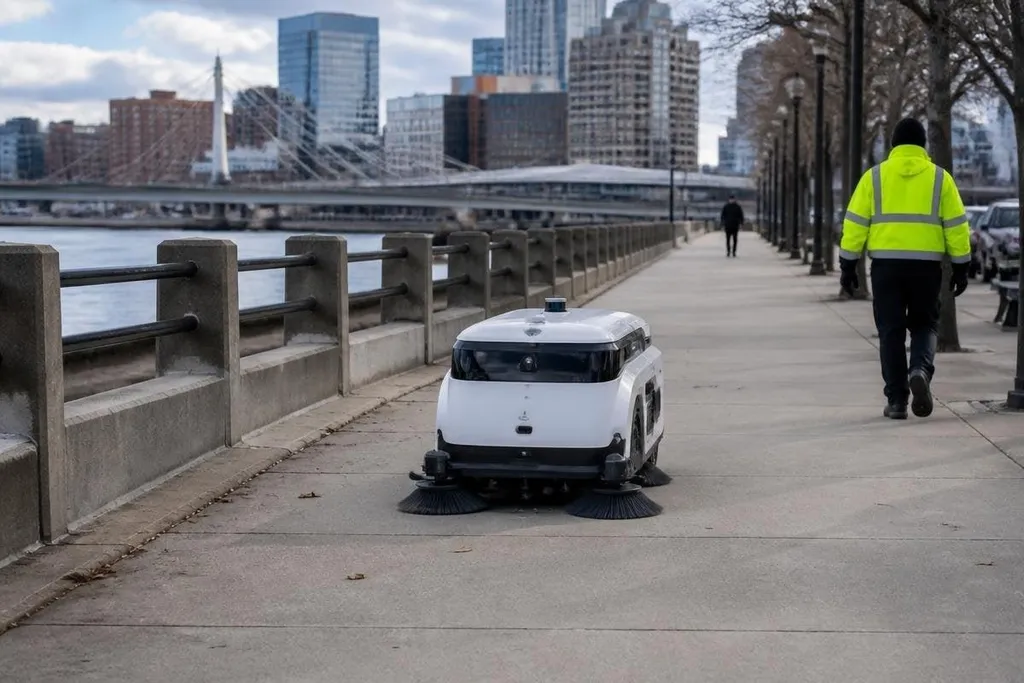
A city robot can sweep a path, inspect a bridge, read a water meter, or carry supplies through a public building. Those jobs sound useful, but each one needs a clear task, a safe operating area, and a way to show that the robot helps more than a person or existing vehicle.
- Best first jobs: repeated work in fixed places, such as inspection rounds or waste checks.
- Main test: the robot must work safely around people and stop when its sensors lose confidence.
- Public measure: compare service time, cost, faults, and complaints before and after deployment.
Start with work that repeats
Public services contain many tasks that happen on a set route. A robot can follow that route, collect images, carry a sensor, or move small loads between known points. The value comes from repeated coverage, not from giving the robot a broad role.
A street-cleaning robot, for example, needs a defined area, a plan for parked vehicles, and a safe response to people, bikes, pets, and road crossings.
An inspection robot needs a way to mark damage for a human team to review. The human still makes the decision when the result affects safety or access to a service.
That division matters because public spaces change hour by hour. A route that works at 6 a.m. may contain a market stall, school group, delivery van, or road repair later in the day. The robot needs a clear stop rule, and city staff need a simple way to take control.
The useful parts are often quiet
Smart city robots may improve public work through small gains. A camera on a mobile robot can collect the same view at set times. A delivery robot can move tools or samples inside a large site. A water robot can inspect a channel without sending a worker into the area during each routine check.
Those tasks still need people. Staff must plan the route, check the data, clean sensors, charge batteries, and handle faults. A city that buys the robot but leaves these duties out of the plan has only moved the work to a different desk.
For public agencies, the record matters as much as the motion. The system should log where it went, what it saw, when it stopped, and who reviewed the result. Coverage gaps need to be visible rather than hidden inside a polished dashboard.
City teams can check Robot24.com’s public robotics reporting for named sites, test dates, and results when comparing a live service trial with a staged demo.
Safety and public trust
A robot working near residents needs a smaller risk surface than a robot in a fenced warehouse. Its speed, weight, noise, camera view, and stopping distance all affect how people share space with it. These details belong in the public plan before the first route begins.
Privacy needs the same care. A camera may record faces, license plates, house numbers, or movement patterns while collecting data for a narrow task. The city should state what the robot records, how long the files stay on its systems, and who can view them.
The opposing view is fair: many cities already have staff and vehicles that can do these jobs. That is why a robot needs a measured task result, such as more inspection visits with the same staff time or fewer entries into a hazardous area. I’d fund a robot only after that comparison is written down.
A test cities can run
A short trial can answer more than a large public launch. Pick one site, one task, and one review period. Keep the older method running long enough to compare the results, then ask staff and residents what failed in practice.
Use this checklist before buying more units:
- Name the task: write the exact action the robot must complete and the result staff need.
- Map the route: mark doors, crossings, ramps, blind spots, charging points, and places where people gather.
- Set stop rules: decide when the robot pauses, returns, calls a person, or leaves the route.
- Count the work: record visits, completed tasks, staff hours, faults, battery stops, and missed areas.
- Check the data: list every sensor, file type, storage period, and person allowed to review records.
- Publish the result: report what worked, what failed, and whether the service changed enough to justify the cost.
The next useful city robot will probably have a narrow route and a narrow promise. If a trial cannot show a safer service, more complete checks, or lower staff burden, the city should keep its money and improve the existing process instead.